
Affiliate Disclosure: This article contains affiliate links. If you purchase through these links, I may earn a commission at no additional cost to you. I only recommend products I personally use and trust.
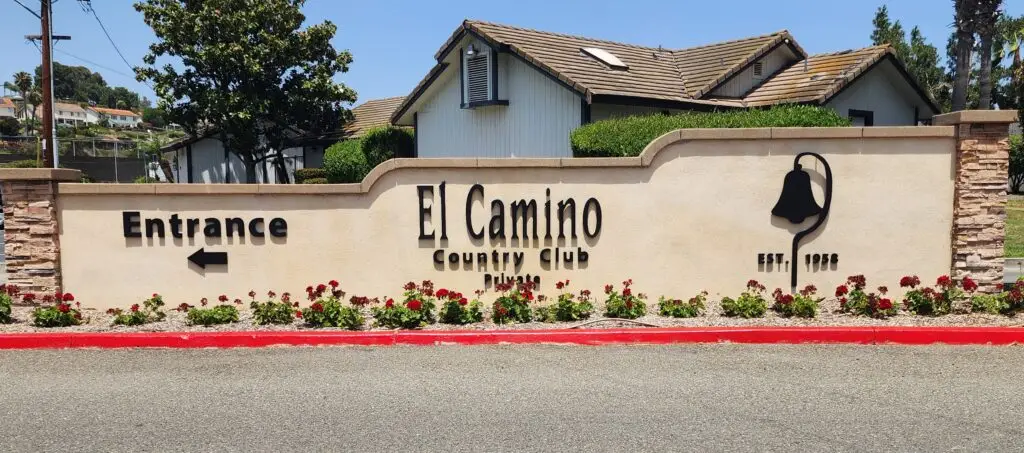
The SCGA Senior Amateur Qualifier at El Camino Country Club on May 18, 2026 gave me the hardest tournament test of my year so far. A course I had never played. Greens running 12 to 13 on the stimpmeter, cut and rolled the morning of the round. A field of senior amateurs competing for 14 qualifying spots and 3 alternate positions in the SCGA Senior Amateur Championship. I shot 83 from an 8:20 a.m. tee time starting on the 10th hole. The qualifying number was 77. I missed by six.
This is the honest story of how that round went sideways, where it held up, and what I am taking from the SCGA Senior Amateur Qualifier into my next tournament. The short version: I lost the round on the greens and in my head, not off the tee. Seven three-putts. Forty total putts. That is where the SCGA Senior Amateur Qualifier was decided. The longer version is below.
SCGA Senior Amateur Qualifier: The Course Setup
El Camino Country Club in Oceanside played 6,567 yards with a 72.3 rating and a 131 slope for the SCGA Senior Amateur Qualifier. On paper, that is a manageable test. In practice, the greens were the story. I asked the pro shop before the round what the greens were running and the answer was 12 to 13 on the stimpmeter, cut and rolled that morning. Those are the fastest greens I have ever putted on in competition.
I had also never seen the course before. Every tee shot, every approach, every layup decision in the SCGA Senior Amateur Qualifier was being made with limited information. Combine fastest-greens-ever with first-time-on-the-course, and you have a tournament setup that punishes any mental lapse. I had several.
The Slow Play Problem At The SCGA Senior Amateur Qualifier
Two players in my foursome were extremely slow. By the time we finished our fourth hole — the 14th — we were already a full hole behind the group in front of us. SCGA officials noticed and started watching our group. By the end of the round we were closer to two holes behind. I tried to do the right thing. I walked ahead to the next tee while my playing partners were still putting out. I played ready golf. I kept my pre-shot routine tight. None of it mattered. The two slow players did not care.
That is the part of the SCGA Senior Amateur Qualifier I am most disappointed with — not the slow play itself, but how much it got into my head. By the time we made the turn, I was on tilt. I knew I should not have been. I have written before about the mental game on the course for golfers over 50 and how letting external factors dictate your round is a losing strategy. I let it happen anyway.
Where The SCGA Senior Amateur Qualifier Slipped Away
The damage in the SCGA Senior Amateur Qualifier was concentrated in a handful of holes. Here is the honest accounting.
Hole 1 (my 10th hole), par 4. I walked to the tee while my playing partners were still putting on 18 to try to catch up to the group ahead. It did not change anything — the slow players were unbothered. I hit a decent drive, hit the green, then three-putted on a green I could not read. Bogey 5.
145-yard par 3. I shanked a 9-iron 50 yards right of the pin. I scrambled to the green and three-putted again. Double bogey 5. Two three-putts in three holes was a sign of where my putting was headed in the SCGA Senior Amateur Qualifier.
Hole 3, 374-yard par 4. This was the snowman. The group ahead of us was already gone — the hole was wide open — but I was fully on tilt from the pace problem and I pulled two drives out of bounds. Quadruple bogey 8. The round was effectively over in terms of the qualifying number. I knew it and I had to swallow it.
Hole 13, par 4. I shanked my pitching wedge right on the approach. Three-putt. Double bogey 6.
Hole 16, 531-yard par 5. A 254-yard drive in the fairway. I made the call to lay up rather than go for it. Pulled a 5-iron out of bounds. One-putt bogey 6. The one par 5 of the SCGA Senior Amateur Qualifier where my scoring math failed me — and it failed on a layup decision, not a reaching decision.
All told, three double bogeys, one quadruple bogey, and seven three-putts on greens I could not read. Forty putts in 18 holes. The math on the SCGA Senior Amateur Qualifier was unforgiving once those started stacking up. The three-putts I detailed above were the ones that hurt most in the moment, but I had four more spread across the round — quiet ones that did not derail a hole but still added a stroke each time.
What Held Up In The SCGA Senior Amateur Qualifier
The bright spots in the SCGA Senior Amateur Qualifier mattered more to me than the missed qualifying number, because they tell me where my game has actually improved. The first is driving. I felt I drove the ball well and long enough for the SCGA Senior Amateur Qualifier setup. My longest drive of the day was 317 yards on the 540-yard 8th hole. Multiple players in the field asked whether I was old enough to play in a senior event. I look young for 56 and the ball was flying — that combination got attention.
The second bright spot was approach play. I hit 13 greens in regulation on 18 holes in the SCGA Senior Amateur Qualifier — 72 percent GIR. That is the best ball-striking round of my 2026 season. On a course I had never seen, against a field of senior amateurs, my irons did exactly what they needed to do. The 83 was not an approach-play problem. It was a putting problem, and the GIR number proves it. If I had averaged even two putts per green, I would have shot 75 and qualified comfortably. The greens were the only thing standing between me and the qualifying number.
The third bright spot was par 5 scoring. I averaged 5.0 on the four par 5s in the SCGA Senior Amateur Qualifier, with one birdie on the par-5 5th, two pars, and the lone bogey on 16. I reached two of the four par 5s in two shots. On a course I had never seen, against a tournament field, my par 5 scoring was the strongest part of my round. I wrote a separate article on how swing speed changed my par 5 scoring because the story deserved its own treatment.
The fourth bright spot was the finish. After the snowman on my 3rd hole I made a decision. If the slow players in my group did not care about pace and my qualifying chances were gone, I was going to stop fighting the round and start playing golf. Over my final six holes of the SCGA Senior Amateur Qualifier, I shot 1-under par. The 7th hole was a 125-yard par 3 — I hit it to 2 feet and made the downhill right-to-left putt for birdie. The exact putt I had been missing all day on the same fast greens. It should have been 2-under — I missed a two-foot birdie putt on the 8th hole. Six holes at 1-under, in tournament conditions, on the same greens that had been beating me all day, against a field of senior amateurs. That is the round I should have played all day.
The Soboba Parallel
The SCGA Senior Amateur Qualifier reminded me of my Soboba tournament in 2025. I had seven three-putts at Soboba Springs on greens I could not get the speed of. Seven at Soboba in 2025. Seven at El Camino in 2026. Same number, same problem, different scorecard. Fast greens with significant break and a player who could not get a feel for either. That is a specific weakness in my game that I need to address before the next tournament round on greens I have not seen.
Putting on unfamiliar fast greens is the single biggest gap between my current game and a competitive senior amateur game. The Arccos data from the SCGA Senior Amateur Qualifier will tell me exactly how many strokes I lost on the greens, but I already know the answer is too many. This is the next problem to solve.
Lessons From The SCGA Senior Amateur Qualifier
A few things I am taking from the SCGA Senior Amateur Qualifier into the rest of the 2026 season.
First, the tilt problem is real and I own it. Slow play is part of tournament golf. SCGA officials handle pace issues at the official level. My job is to play my own round regardless of who is in my group. I did not do that in the SCGA Senior Amateur Qualifier and it cost me strokes I cannot get back.
Second, the practice round matters more on fast-green courses than I have been treating it. For tournaments at courses I have not played, especially ones with reputations for fast greens, I need to build a practice round into the schedule. The SCGA Senior Amateur Qualifier was not a course where I could read greens on the fly. Some courses you can. El Camino was not one of them.
Third, my game off the tee is tournament-ready. Fifteen months of swing speed training have put me in position to drive the ball with senior amateur fields. Whatever distance I still need to find through the rest of my Stack System training is bonus, not necessity. The work to do now is on the green and between the ears.
What Comes After The SCGA Senior Amateur Qualifier
Five days after the SCGA Senior Amateur Qualifier I tee it up at Desert Springs JW Marriott Valley in an individual net event. Different format, different course, different setup. I will not be qualifying for anything. But I will be carrying forward what the SCGA Senior Amateur Qualifier taught me about pace, tilt, and the specific putting weakness I need to address before the next tournament on fast greens.
I want to play El Camino again. The SCGA Senior Amateur Qualifier setup deserves a second look — a course that good, with greens that fast, is the kind of test I need more of. Redemption is a strong word for a recreational competitive amateur, but I would take another swing at it. The next round there will be a different story.