
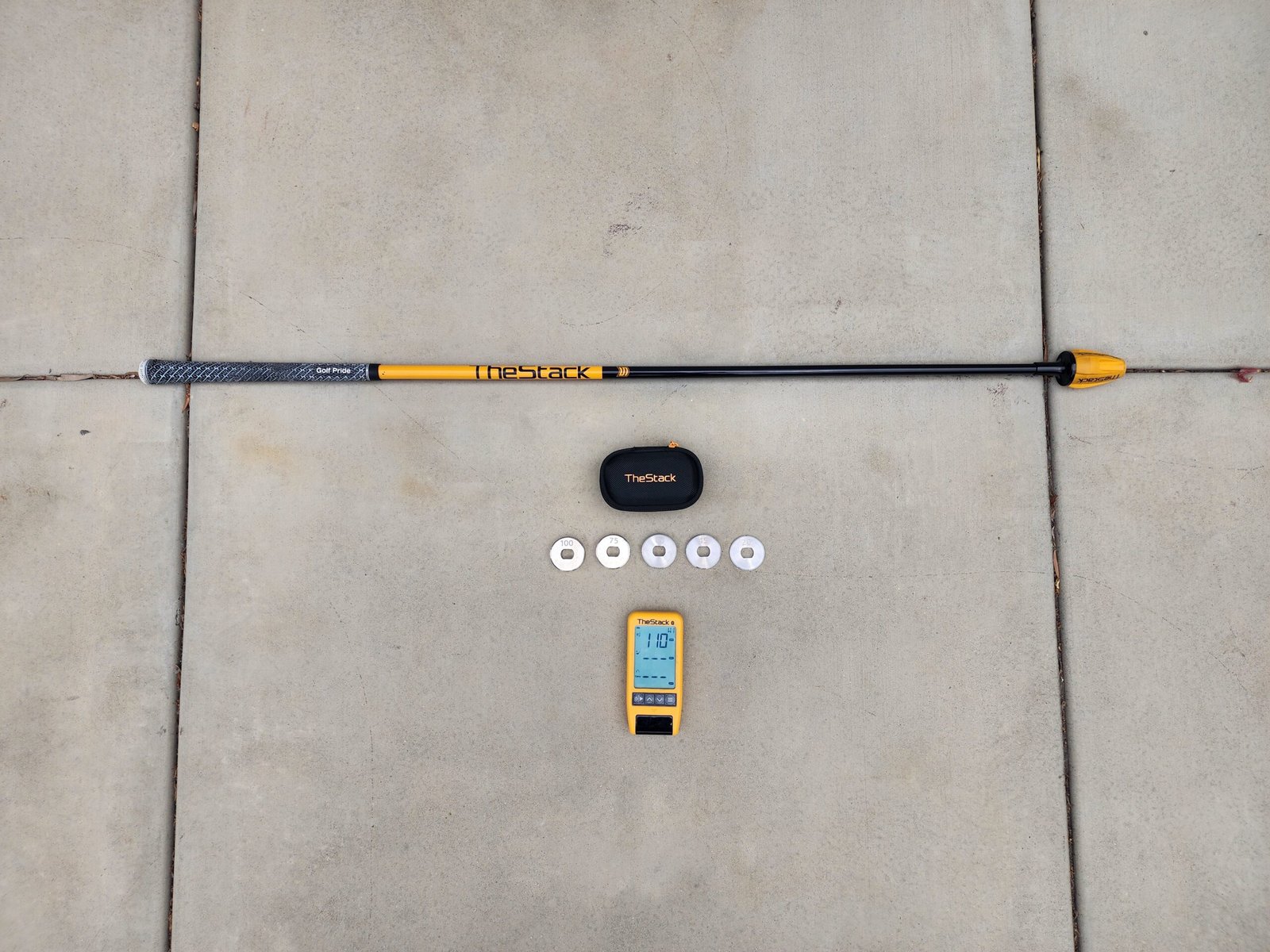
@115at56 — The Stack System Journey
Speed Log: Every Session.
Every Rep. Every MPH.
Documenting the @115at56 journey — from 89 mph to 115 mph using the Stack System overspeed trainer.
Last Updated: June 16, 2026 — Program 7 Complete

The Tool Behind +22 mph
From 89 to 111 mph with The Stack System
Seven completed programs, 18 months of work, and the only overspeed training system I trust. The app builds your program from your own speed data — no guessing. Use my link for 10% off.
Affiliate link · I earn a commission at no extra cost to you
Affiliate Disclosure: This page contains affiliate links. If you purchase through my links I earn a small commission at no extra cost to you. I only recommend products I personally use and train with.
Why I Publish My Training Data
I’m Marino — a 56-year-old competitive amateur golfer in Southern California who decided to stop guessing about swing speed and start training for it. The Stack System promised real, measurable gains through overspeed training. I wanted to know if it actually worked for someone my age.
This Speed Log is the answer. Every program I complete, every personal best I set, every speed chart from the Stack app — it all lives here. No cherry-picked highlights. No manufactured hype. Just the raw numbers from a competitive amateur who started at 89 mph and is chasing 115.
If you’re researching the Stack System and want to see what real-world results look like for a 50+ golfer, you’re in the right place. Bookmark this page — it updates every time I complete a new program.
Program History
Foundation Through Program 7
My complete training history in the Stack app — starting with the Foundation program and running through all seven completed programs. Each bar shows where I started and where I finished by the end of that program.
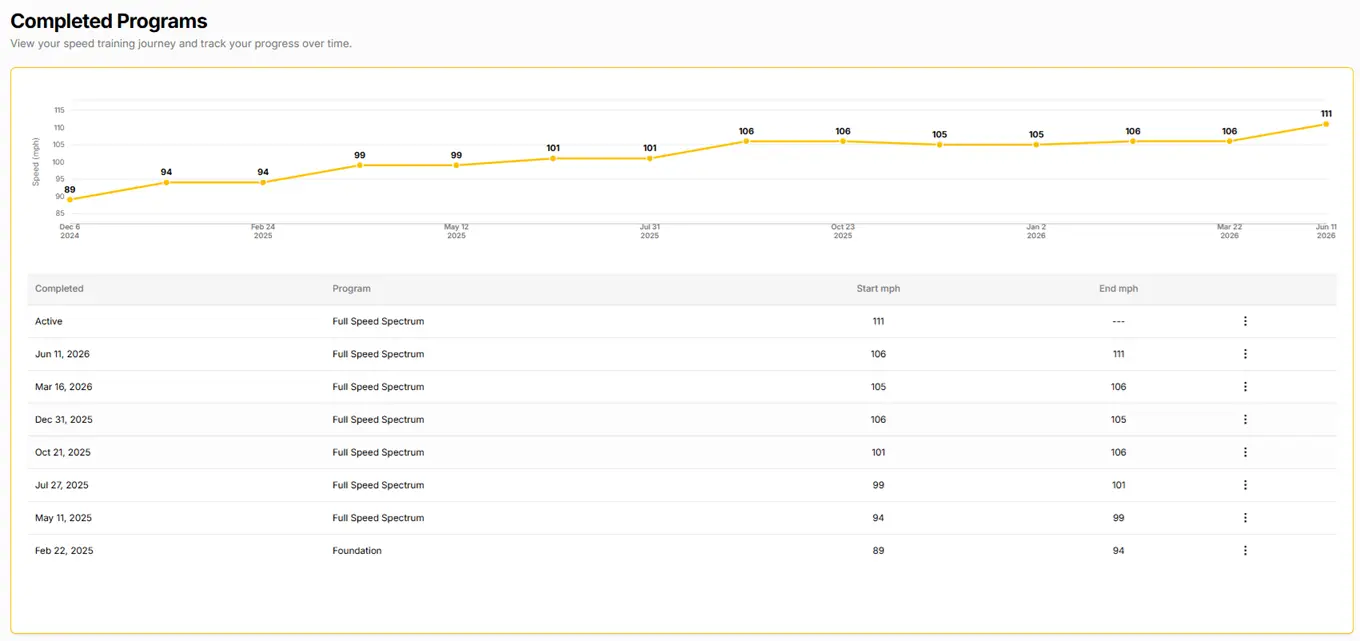
The Foundation program established my movement pattern before any speed work began. Each Speed Spectrum program pushed the ceiling a little higher. Program 7 brought a new personal best of 111 mph — proof that the nervous system adaptation keeps compounding when you stay consistent.
Speed Testing
Baseline vs. Progress Check
The Stack System runs formal speed tests at the start and at key checkpoints throughout training. These aren’t training swings — they’re maximum effort tests at every weight to measure true gains. This is the before-and-after data that matters most.
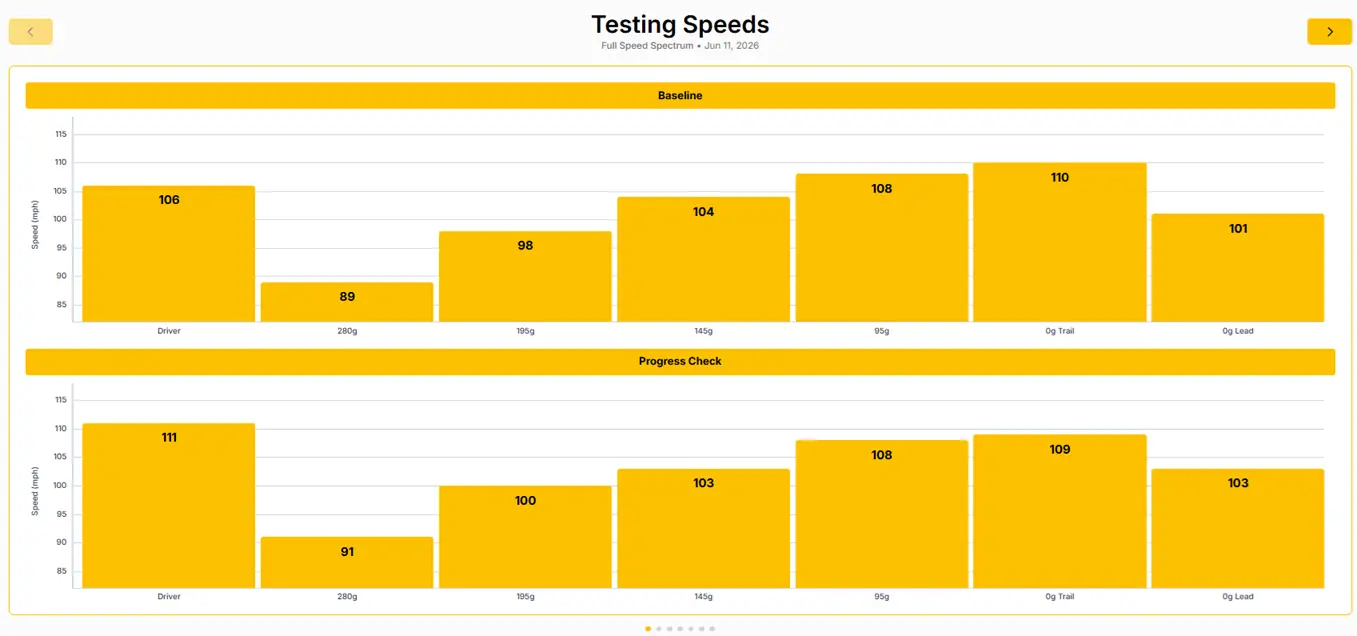
My baseline test on January 2, 2026 clocked my driver speed at 105 mph. The progress check numbers tell the story of what seven programs of consistent training actually produces. The lighter weights — 95g and unweighted — show the biggest jumps. That’s where the overspeed stimulus is strongest and the nervous system adapts fastest.
Training Speeds
Training Speeds at 195g: Session by Session
The 195g club is the primary training weight in the Stack System — the sweet spot between resistance and speed. This chart shows my speed at 195g across every session in Program 7, plus the total swing volume accumulated.
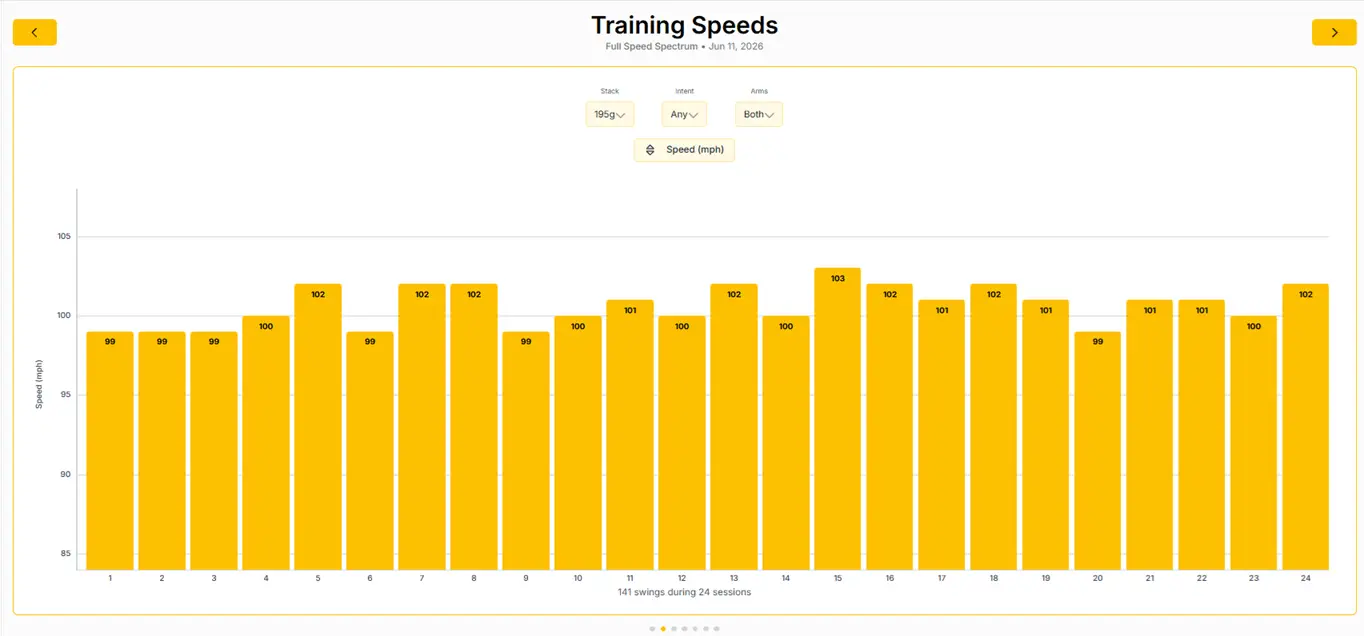
The day-to-day variation is real — fatigue, sleep, stress all show up in these numbers. But the trend line is what counts. Across seven programs the 195g speed has climbed steadily, which means my sustainable training speed is rising even before I get to max-effort test swings.
Personal Bests
Personal Best Speeds at Every Weight
Personal bests are the milestone markers of the entire journey. These are the single fastest swings ever recorded at each weight — from the heaviest 280g club all the way to unweighted 0g swings. Each one has a date attached, which tells its own story about when breakthroughs happened.
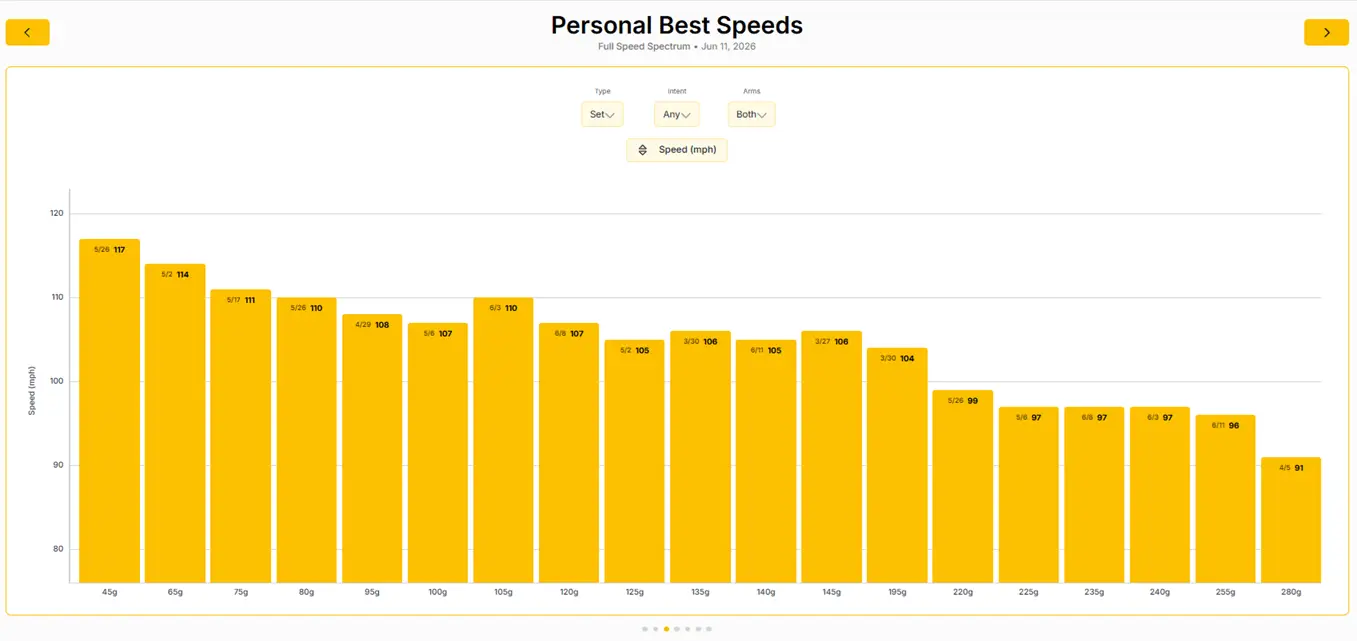
The jump in speed as the weight decreases shows the overspeed effect working as designed. Heavier weights build strength; lighter weights train the nervous system to fire faster. My 0g lead arm speed is the number I watch most closely — it’s the closest proxy to what my driver speed ceiling actually is.
Performance Trends
Performance Trends Across All Sessions
The Stack app tracks more than just speed. Driver eSpeed, Distance Potential, Grit Score, and Health & Energy paint a full picture of training quality — not just peak numbers.
Driver eSpeed
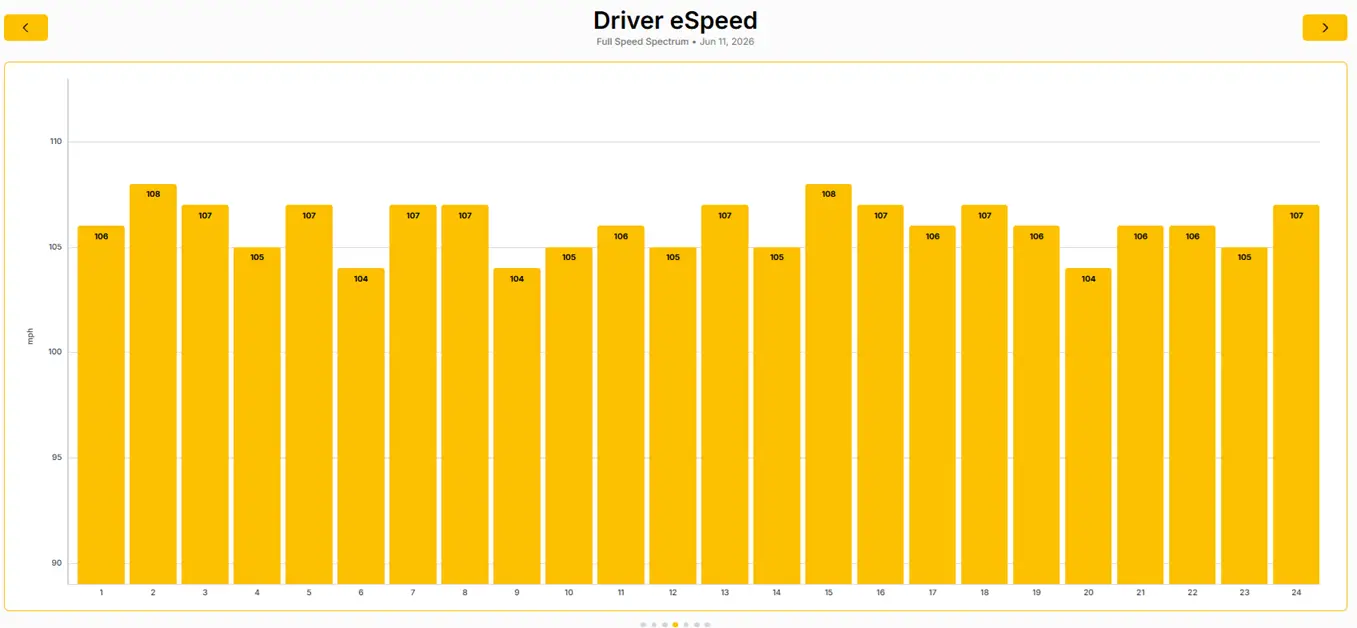
Driver eSpeed tracks my driver swing continuously across every session — the clearest feedback that the program is working.
Distance Potential
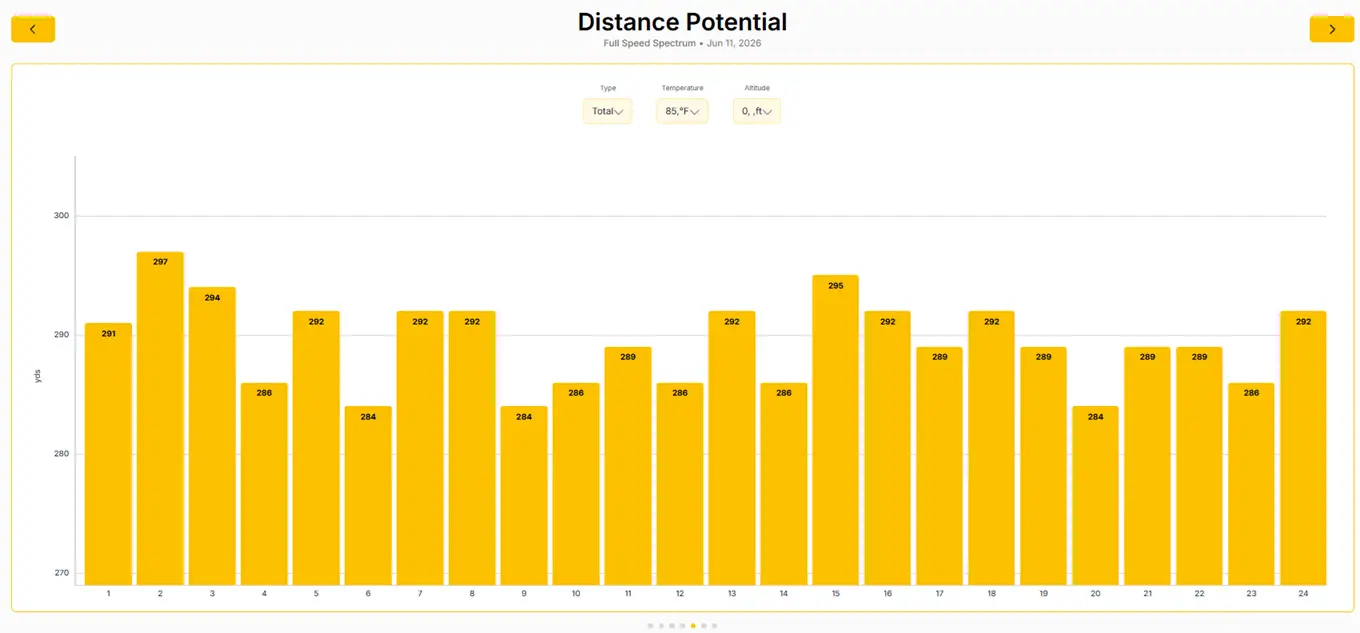
Distance Potential translates my swing speed into projected carry distance — a real calculation from my actual training data, not a simulator estimate.
Grit Score
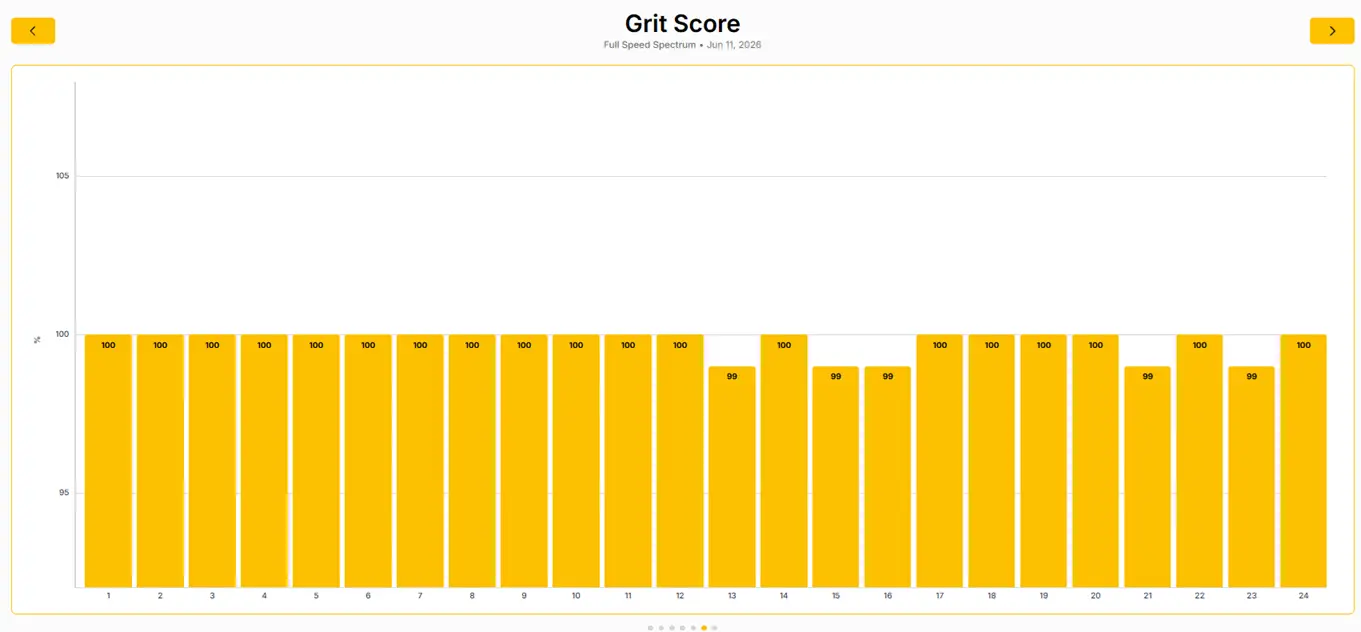
Grit Score measures training consistency and effort. A score that stays high across a full program tells me the work is actually getting done.
Health & Energy
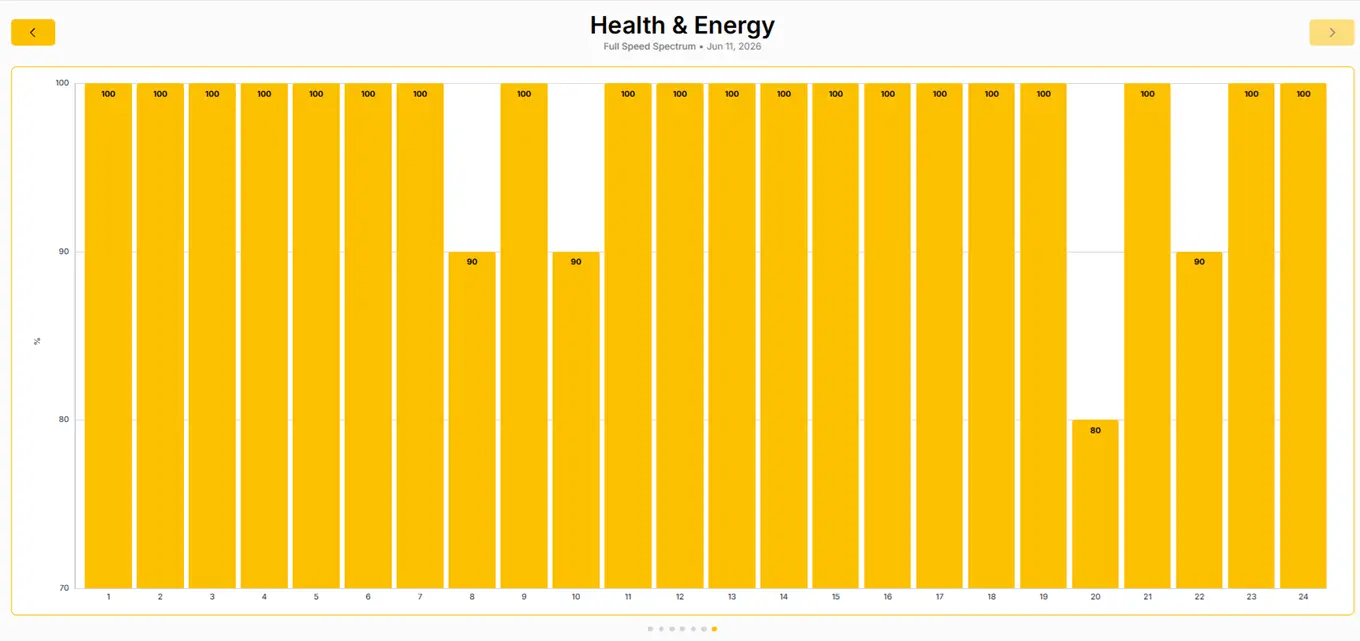
Health & Energy tracks recovery between sessions. For a 56-year-old training alongside hot yoga and tournament golf, this number is a real signal — dips here show up in speed numbers the next session.
FAQ
Frequently Asked Questions About the Stack System
How long does it take to see results with the Stack System?
In my experience, measurable speed gains showed up within the first two programs — roughly 6–8 weeks of consistent training. The Foundation program sets the movement pattern; the real speed jumps came once I was into the Speed Spectrum sessions. Most users report noticeable gains within 60–90 days, though results depend heavily on training consistency and starting speed.
What swing speed gains are realistic with the Stack System?
My driver speed went from 89 mph to 111 mph over seven programs — a 22 mph gain. I’ve also seen other Stack users in the 50+ age group report gains of 10–20 mph over a full training cycle. Younger players with more athletic backgrounds often see faster initial gains, but the nervous system adaptation is real at any age.
Does the Stack System work for golfers over 50?
Yes — and I’d argue it works especially well for older players who have lost speed to age-related muscle fiber changes. Overspeed training directly targets fast-twitch fiber recruitment, which declines with age unless you specifically train it. At 56, I’m adding speed I’d assumed was gone for good. The key is consistency and recovery — both of which the app tracks.
How is the Stack System different from SuperSpeed Golf?
Both use overspeed principles, but the Stack System is app-driven — it monitors your training speeds in real time, tracks every session, and adapts the program based on your data. SuperSpeed is a fixed protocol with three clubs and a printed program. The Stack feels more like having a coach in the room. I cover both in detail in the full Stack System review.
What is the Grit Score in the Stack app?
The Grit Score measures training consistency and effort. It factors in how many sessions you’ve completed, how hard you’ve worked within each session, and whether your speeds are trending in the right direction. A high Grit Score tells the app — and tells you — that you’re doing the work.
Can I do the Stack System alongside other golf training?
I train with the Stack System alongside an 11-year hot yoga practice and competitive tournament play — so yes, absolutely. The key is managing recovery. Stack sessions are short (15–20 minutes) but neurologically demanding. My Health & Energy scores in the app have been a useful guide for managing training load.
Lorem ipsum dolor sit amet, consectetur adipiscing elit. Ut elit tellus, luctus nec ullamcorper mattis, pulvinar dapibus leo.
Want the Full Story?
Seven Programs. Real Data. Honest Results.
Read the complete Stack System review — every program, every data point, the honest verdict from a 56-year-old competitive amateur golfer.
Program 7 Complete: The Full Data
Read the Full Stack System Review
About the @115at56 Journey
Ready to start your own speed training journey?
Affiliate link — I earn a commission at no extra cost to you.
Lorem ipsum dolor sit amet, consectetur adipiscing elit. Ut elit tellus, luctus nec ullamcorper mattis, pulvinar dapibus leo.
