
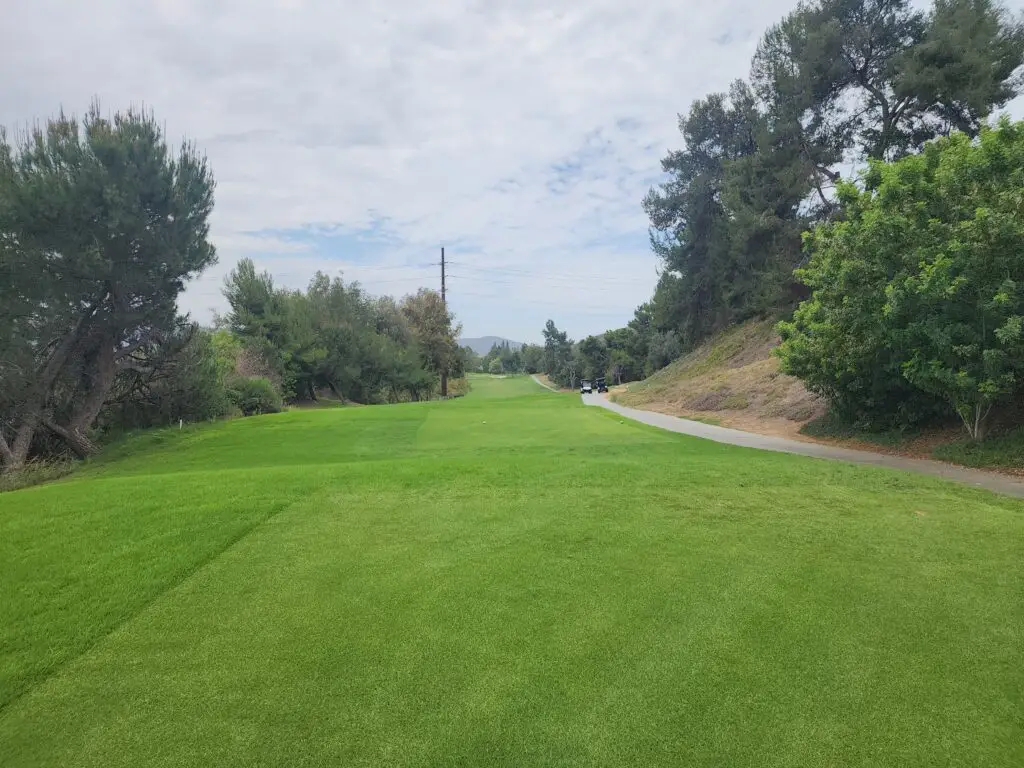
Chapman format golf doesn’t care how you normally play. It cares whether you and your partner can think like one player — and today, we couldn’t quite get there.
I teed it up at Pala Mesa Resort in a Net Team Chapman event (alternate shot) with a partner I hadn’t played with before. We shot 81, netted 74, and finished 28th. No Arccos data today — the format doesn’t allow individual shot tracking — so this isn’t going to be a stats-heavy breakdown. It’s a format story instead.
Round Snapshot
Event: Pala Mesa Resort — Net Team Chapman
Score: 81 (Gross) / 74 (Net)
Finish: 28th
Format: Alternate Shot (Chapman)
What Chapman Format Golf Actually Demands
For anyone unfamiliar: Chapman format starts with both players hitting a tee shot, then you swap balls for the second shot, pick the better result, and play alternate shot the rest of the hole. It sounds simple on paper. In practice, it means every shot carries someone else’s decision-making baked into it — their club selection, their miss tendencies, their read on the wind. You’re not managing your own round anymore. You’re managing a shared one.
That’s a different skill than the one I’ve spent the last 17 months building. My whole training focus — the Stack System work, the swing speed gains, the course management data from my bag setup — is built around knowing exactly how I play. Chapman format golf strips that away and replaces it with adaptation on the fly.
How the Round Went at Pala Mesa
The card tells a more specific story than “off day” once you look at it hole by hole. On hole 3 — the #1 handicap hole on the course, a 377-yard par 4 — we made triple bogey. That’s exactly the kind of hole Chapman format golf can turn into a disaster: one shot goes sideways, your partner inherits a lie neither of you would have chosen, and the hole snowballs before either of you can fix it.
What I liked was the response. Four holes later, on the par-3 7th, we made birdie. That’s the version of Chapman format golf that’s actually fun — two players trusting each other enough to attack a hole instead of just surviving it. It didn’t last. We gave a shot back with a double bogey on 15, and the back nine settled into bogey golf the rest of the way.
That’s the real shape of the round: one blowup, one answer, one more slip, and a lot of pars and bogeys filling in the gaps. Not a collapse, not a hot round — just two players who occasionally clicked and mostly didn’t.
Why I’ll Take Stroke Play Over Chapman Format Golf
I’ll say it plainly: I prefer stroke play. Alternate shot puts pressure in a strange place — you can hit a great shot and hand your partner a lie they can’t do anything with, or inherit one yourself with zero say in how it got there. There’s no Arccos tracking to fall back on, no swing speed data to lean on, no individual scorecard to hide behind. It’s just you, a partner, and however your two games happen to mesh that day.
None of that makes it a bad format — plenty of golfers love the puzzle of it. It’s just not where my game lives right now. I’m still chasing 115 mph and dialing in course management as an individual, and Chapman format golf pulled focus away from both of those threads for a day.
What’s Next
Back to individual stroke play at Rio Hondo on July 24, part of the SCGA One Day Series, where the Arccos sensors go back on and the data-driven recaps resume. Pala Mesa was a worthwhile experiment — I know a lot more about what Chapman format golf asks of a player than I did before I teed off. I just also know it’s not my format.