
Affiliate Disclosure: This article contains affiliate links. If you purchase through my link, I earn a small commission at no extra cost to you — and you get 10% off. I only recommend products I personally use and believe in.
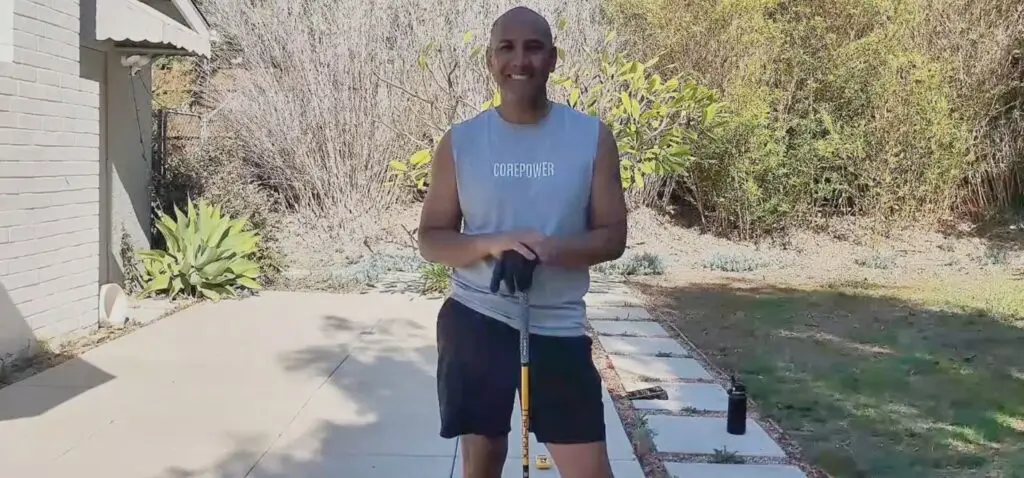
This Stack System review is written by someone who has actually put in the work. I’m Marino — a 56-year-old competitive amateur golfer and 3 handicap. I’ve completed 7 full Stack System programs, going from 89 mph to 111 mph driver swing speed. This Stack System review isn’t based on a weekend test. These are real results from a real golfer over 50 who trains in his backyard three times a week.
If you’re wondering whether the Stack System is worth it, keep reading. This Stack System review covers exactly what it is, how it works, what results are realistic for older golfers, and who it’s the best fit for. No hype. Just what you need to know.
What Is the Stack System?
The Stack System is a structured overspeed training program for golfers. It includes a set of weighted training shafts and a companion app that guides your workouts, tracks your swing speeds, and adjusts your training based on your actual performance.
It was developed with input from Dr. Sasho MacKenzie, one of the world’s leading researchers in golf biomechanics, along with PGA Tour coach Matt Killen. The science is grounded in peer-reviewed research on motor learning, neural adaptation, and power development — not marketing intuition.
The Stack System is used by PGA Tour players, LPGA Tour players, and thousands of amateur golfers worldwide. Its structured, data-driven approach makes it especially effective for golfers over 50 who benefit from systematic, progressive training rather than guesswork.
How the Stack System Works
The Stack System is built on the principle of overspeed training — using implements lighter than your driver to train your nervous system to move faster than it normally can.
Here’s the simplified science:
- When you swing something lighter, your body can accelerate it faster than your normal movement pattern allows.
- With repeated exposure to faster movements, your nervous system creates new neural pathways — essentially learning that faster is possible and safe.
- When you swing your normal club, you access those faster patterns. Over time, your baseline speed increases.
This isn’t new science. Athletes in sprint training, baseball, and tennis have used overspeed protocols for decades. The Stack System is the first program to apply this to golf in a structured, measurable, progressive way.
The Training Shafts
The Stack ships with training shafts of varying weights. You progress through them systematically — not randomly. The program tells you exactly which weight to use based on where you are in the training cycle. There’s no guessing and no wasted sessions.
The Stack System App
The app is the brain of the operation. It guides each session in real time, records your swing speed via your phone’s microphone, tracks your progress over time, and adjusts the difficulty based on your actual performance — not a generic schedule.
The tracking component is something most golfers underestimate. Seeing your numbers move week over week is a powerful motivator. The app also flags personal records in real time, which keeps you pushing on days when motivation is low.
The Training Sessions
A typical Stack System session takes about 20 minutes with rest between sets. The standard session includes four sets at two different weights — full effort swings and max effort swings. Full effort mimics the fastest swing you’d make on the golf course. Max effort is all-out — losing your balance is not just okay, it’s expected.
Sessions are designed to be done two to three times per week. That consistency is what drives the neural adaptation. Sporadic training won’t get you there.
My Stack System Review: 89 to 111 mph at Age 56
When I started this Stack System review journey, my driver swing speed was 89 mph — solidly below average for my age group based on the average golfer swing speed benchmarks. After 7 completed programs, I hit a new personal best of 111 mph — a gain of 22 mph that puts me well above average for golfers in their 50s.
Here’s how that progression looked:
- Baseline (start): 89 mph driver swing speed
- Programs 1–2: Early neural adaptation — speed started moving faster than expected
- Programs 3–4: Consistent gains, numbers becoming more reliable set to set
- Programs 5–6: Speed starting to feel natural, not forced — plateau hit at 106 mph
- Program 7: 111 mph new personal best — plateau broken after TPI assessment identified rotational power deficits
- Program 8: Currently underway, chasing 115 mph
For the complete Program 7 data breakdown — progress check results, grit score, baseline vs. progress check comparison, and what broke the plateau — read my Stack System Program 7 complete results.
For the full breakdown of every program’s numbers, read my complete Stack System swing speed results.
The difference on the course is real. Par 5s that required three shots to reach the green are now reachable in two. I’m hitting shorter irons into par 4s. My handicap has dropped from 7 to 3 over the same period — and swing speed is a meaningful part of that story.
What Results Can Golfers Over 50 Expect from the Stack System?
This is the question that matters most. Before setting a target, it helps to know where your speed stands relative to other golfers your age — our average golf swing speed by age data gives you that context. Based on my personal experience and the Stack System’s published data:
- First 4 weeks: 3–7 mph gains as your nervous system adapts
- 8–12 weeks: 7–12 mph gains for golfers following the protocol consistently
- 6–12 months: 12–20+ mph for committed golfers who also address mobility and fitness
Golfers over 50 often see some of the most dramatic early gains. This age group tends to have the most headroom — years of unconsciously holding back mean the nervous system brake is firmly applied. When you begin systematically releasing it, speed shows up quickly.
Every 1 mph of clubhead speed equals approximately 2.5 yards of driver distance. A 10 mph gain is 25 extra yards. A 15 mph gain changes what club you’re hitting into almost every par 4 on your home course.
Stack System Review: How It Compares to the Alternatives
Stack System vs. SuperSpeed Golf
SuperSpeed Golf is the other major overspeed system on the market. It’s a legitimate product. But there are meaningful differences.
SuperSpeed uses a fixed protocol that doesn’t adapt to your individual progress. It also lacks the real-time speed tracking and periodization the Stack app provides. For golfers who want a data-driven, adaptive program, the Stack System is the stronger choice.
SuperSpeed may suit golfers who prefer a simpler, less tech-involved approach.
Stack System vs. Weighted Clubs
Weighted clubs are essentially the opposite of overspeed training — they slow you down to build strength. They have their place in a comprehensive program but won’t produce the same neurological speed adaptation that overspeed work creates. Different tools, different goals.
Stack System vs. Just Hitting More Balls
Hitting balls doesn’t train speed. It trains your existing patterns more deeply. If your current pattern produces 88 mph, hitting more balls produces 88 mph more consistently — but it won’t push you to 98. Deliberate, progressive speed training is the only thing that moves the ceiling.
Stack System vs. Lessons
Lessons improve technique. The Stack System improves physical capacity. The two are complementary, not competing. A swing coach can optimize your movement patterns — but the Stack gives you more speed to work with. Both together is the best combination for golfers serious about improving.
The Honest Cons of the Stack System
No Stack System review is complete without the downsides. Here’s what you should know before buying:
- It requires real commitment. Two to three sessions per week, consistently, over months. This isn’t a one-time fix.
- The app requires a smartphone. If you’re not comfortable with apps, there’s a learning curve — though it flattens quickly.
- Speed training alone isn’t enough. The Stack is most powerful when combined with mobility and fitness work. Golfers who skip those pillars leave significant gains unrealized.
- The price is premium. It’s an investment. But compared to a new driver, a season of range balls, or lessons that won’t move your speed ceiling, the math tends to work out.
- Results take time. The first few sessions feel awkward. Stick with the protocol — the adaptation takes weeks, not days.
Who Is the Stack System Best For?
The Stack System is the right choice if you:
- Are serious about gaining distance and willing to follow a structured program
- Like tracking your progress and making data-driven decisions
- Want a program built on peer-reviewed science, not marketing claims
- Are over 50 and have noticed meaningful speed loss over the years
- Want to be measurably faster in 6 months, not just feel like you’re swinging better
It may not be the right fit if you:
- Want a casual, low-commitment approach to the game
- Aren’t willing to set aside 20–30 minutes a few times per week
- Have significant physical limitations that need addressing first — work with a physio or TPI specialist before starting
Frequently Asked Questions About the Stack System
How long before I see results? Most golfers see measurable gains within the first 4 weeks. Significant gains — 10 mph or more — typically come after 8–12 weeks of consistent training.
Do I need to be athletic to use the Stack System? No. The program is designed to meet you where you are. The app adjusts based on your actual performance, not an assumed fitness level.
Can I use the Stack System if I have back problems? Consult your doctor or physio first. The max effort swings are physically demanding. Many golfers with managed back issues train with the Stack successfully — but get clearance before starting.
Is the Stack System only for older golfers? No — it’s used by tour players and competitive amateurs of all ages. But golfers over 50 tend to see some of the most dramatic gains because they typically have the most untapped speed potential.
What equipment do I need besides the Stack? Just your phone and enough space to swing. No radar gun, no launch monitor, no additional hardware required.
Final Verdict on This Stack System Review
The Stack System is the most sophisticated, data-driven speed training product available for amateur golfers — and it’s particularly well-suited for golfers over 50.
I went from 89 to 111 mph at age 56 across 7 completed programs. Program 7 broke a 5-program plateau with a 4 mph gain and a new personal best. Program 8 is underway. The goal is 115. The Stack System is the reason those numbers are moving — and everything in this Stack System review reflects real-world results, not theory.
If you’re serious about getting faster — not just hoping for it — the Stack gives you a proven, structured path to get there. Use my link below to save 10% on your order. The discount is applied automatically at checkout.
→ Try the Stack System and save 10% — discount applied automatically at checkout.
Continue reading:
Pingback: Best Mission Hills North SCGA Recap: 79 Back From Injury